The Art of the Wild: Crafting Digital Landscapes with Nature Forest Illustrations
In the realm of digital design, capturing the essence of the natural world presents a unique challenge. The intricate details of a forest canopy, the subtle gradation of light through leaves, and the complex textures of bark and moss require both artistic skill and technical precision. For designers seeking to incorporate these elements into their projects, from branding to educational materials, the availability of high-quality, editable assets is paramount. This is where specialized illustration collections, particularly those focused on nature and forest landscapes, become invaluable tools.
The Foundation: Understanding Vector-Based Nature Art
Vector graphics, such as those provided in AI and EPS file formats, form the backbone of professional digital illustration. Unlike raster images, which are pixel-based and can lose quality when scaled, vector artwork is built from mathematical paths and points. This means a single illustration of a towering pine or a delicate fern can be enlarged to billboard size or reduced to a tiny app icon without any loss of detail or crispness. This technical characteristic is fundamental for creating versatile design assets, especially when depicting the organic yet detailed forms found in forest landscapes.
Core Characteristics of a Professional Illustration Set
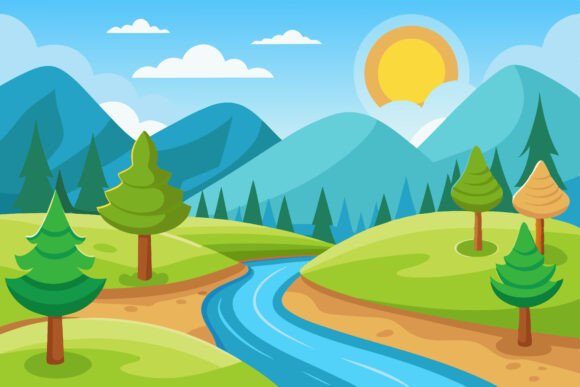
When evaluating digital illustration resources, several key attributes define their quality and utility. A meticulously organized file and layer structure allows designers to navigate complex scenes easily, isolating individual elements like a specific tree, a group of rocks, or a background mountain range. Perfection in details and consistency across the set ensures that every illustration maintains a cohesive artistic style, whether it's a realistic depiction of oak leaves or a more stylized interpretation of a forest stream. This uniformity is crucial for projects requiring a suite of matching visual elements.
The Practical Advantages for Diverse Users
The utility of a well-crafted nature illustration collection extends across a staggering array of applications. For professionals in marketing and branding, these assets can be used to create evocative campaigns for eco-friendly products, outdoor tourism, or wellness services. Educators and researchers can incorporate clear, scalable diagrams of forest ecosystems or plant anatomy into textbooks, presentations, and interactive learning modules. Hobbyists creating personal projects, such as blog graphics or custom merchandise, benefit from the ability to edit and adapt pre-made artwork without needing to draw every element from scratch.
Perhaps one of the most significant advantages is the cross-platform compatibility offered by standard formats like AI and JPG. Designed for both Mac and Windows users, these files ensure that teams using different operating systems can collaborate seamlessly on the same visual project. The inclusion of a JPG preview alongside the editable vector files provides a quick reference and facilitates use in contexts where a simple raster image is sufficient.
Real-World Use Cases and Implementations
Consider a small business owner developing a website for a nature retreat. They might use forest landscape illustrations to create custom icons for services, decorative borders for text sections, and a unique logo featuring a local tree species. The editable nature of the files allows them to adjust colors to match their brand palette—perhaps shifting summer greens to autumn golds—and modify the iconography to fit specific needs. This level of customization is powered by the underlying vector structure.
Similarly, an app developer focusing on outdoor activity tracking could utilize a set of nature symbols for their interface. The scalability of the vectors ensures icons remain sharp on every screen resolution, from smartphones to tablets. The organized layer structure enables the developer or their designer to quickly extract individual symbols, like a hiking path marker or a wildlife animal, for use in different parts of the application's user interface.
Editing and Adaptation: The Key to Creative Freedom
The promise that you can edit, change colors, and modify elements easily is not merely a convenience; it is a transformative feature. It bridges the gap between using stock imagery and possessing truly original artwork. A designer can take a base illustration of a dense forest landscape, remove or rearrange trees, add custom flora, or alter the lighting scheme to create a scene that perfectly fits a narrative. Color changes can adapt a scene from a bright midday setting to a misty dawn or a deep twilight, all without repainting the entire image.
This adaptability is particularly relevant for projects with stringent aesthetic requirements or those needing to depict specific, real-world locations. It empowers creators to start from a position of high-quality, detailed artwork and then direct it towards their precise vision, saving immense time while maintaining artistic control.
Considerations for Print and Digital Media
Suitability for both print and web is a critical requirement for modern design assets. The same forest illustration might be used on a high-resolution brochure cover, requiring crisp lines and solid color areas for CMYK printing, and later on a website banner, where its vector nature allows for responsive scaling. The inherent qualities of AI and EPS files support this dual-purpose use. The perfection in details ensures that when printed, intricate elements like leaf veins or bark patterns hold their integrity, enhancing the professional quality of the final product.
For infographics, which often combine data with illustrative elements, having a set of consistent, editable nature symbols allows for clear visual communication. A chart about deforestation, for instance, could integrate stylized but recognizable tree icons of different sizes or types, directly edited from the master illustrations to represent specific data points.
The integration of nature and forest landscape themes into digital projects is more than an aesthetic choice; it is a way to connect concepts to universal experiences of growth, tranquility, and ecosystem complexity. The availability of specialized, technically robust illustration collections dedicated to this theme provides a foundation upon which a vast spectrum of creators can build. These resources translate the complexity of the natural world into a structured, editable digital language, enabling its beauty and symbolism to enhance everything from commercial products to educational tools and personal art. The functionality embedded in the file formats and the thoughtful organization of the artwork itself directly addresses the practical hurdles designers face, allowing the focus to remain on creativity and communication.