Ruler Icons: A Set of High-Quality Icon Designs
In the realm of digital and print design, the selection of visual assets like icons can significantly influence a project's clarity, aesthetic, and user experience. Among the available options, sets like Ruler Icons present themselves as comprehensive packages of minimalist icon design. This article provides an objective evaluation of such an icon set, exploring its characteristics, potential applications, and considerations for designers and project managers.
What Is Ruler Icons?
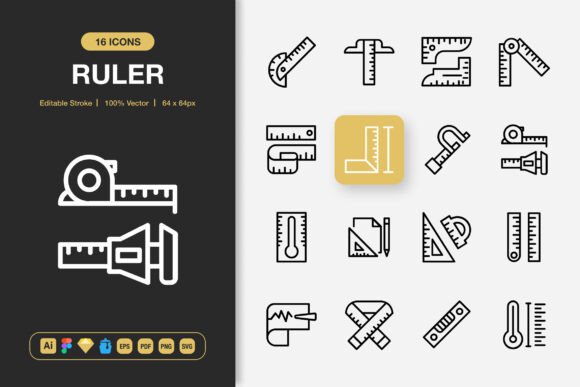
Ruler Icons refers to a curated collection of high-quality icons. The set is described as suitable for a wide variety of projects, ranging from digital interfaces like websites and mobile apps to physical media such as books, flyers, banners, and posters. The core design principle is minimalism, aiming for clean, uncluttered visual communication. The package is typically bundled with multiple file formats and features that cater to a professional workflow.
Key Features and Technical Specifications
The technical offering is a central aspect of Ruler Icons. The set includes icons with editable strokes, allowing designers to adjust line weights and details within compatible software. The promise of high quality suggests attention to vector precision and scalability. The package emphasizes customization and ease of use through a drag-and-drop approach.
Included files are crucial for versatility across different tools and stages of production. A typical bundle includes:
- Source File (Adobe Illustrator)
- Figma File
- Iconjar File
- EPS Version 10
- PDF File
- SVG File
- PNG Files with Transparency
- A Readme.txt file
This multi-format support aims to bridge workflows between vector editing, UI/UX design platforms, and final output for web or print.
Potential Benefits and Reasons for Interest
Professionals researching icon sets might consider Ruler Icons for several practical reasons.
- Workflow Efficiency: Having a single, consistent set across multiple file formats can reduce time spent converting or recreating assets for different platforms.
- Design Consistency: A minimalist set with a unified style helps maintain a coherent visual language throughout a project's various touchpoints.
- Scalability and Quality: Vector-based source files (AI, SVG, EPS) ensure icons can be scaled to any size without loss of detail, which is essential for applications ranging from mobile app buttons to large format posters.
- Broad Application Scope: The explicit suitability for both digital and print media makes it a candidate for projects that require a cross-channel presence, such as a campaign involving a website, social media graphics, and physical flyers.
The editable stroke feature offers a level of flexibility, enabling minor adjustments to match specific design guidelines without altering the core icon shape.
Trade-offs and Important Considerations
While the feature list is extensive, a balanced evaluation requires acknowledging potential trade-offs and setting realistic expectations.
Scope of the Icon Library
The term "set" implies a finite collection. A potential consideration is the total number of icons and their thematic coverage. Does the set cover a wide enough range of concepts and actions needed for a specific project? A minimalist design philosophy might also mean a specific visual tone; it may not suit projects requiring highly detailed, illustrative, or playful iconography.
The Meaning of "Customizable"
While strokes are editable and colors can typically be changed in vector software, the extent of customization might be limited to these parameters. The fundamental shapes are predefined. For projects requiring entirely unique iconography, a custom design service might be a more appropriate alternative.
Software Dependency and Skill Requirement
Full utilization of the core features, like editing strokes in the Adobe Illustrator source file, requires access to that software and proficiency in using it. The provided Figma file aids UI designers, but teams working exclusively with other tools (like Sketch or Adobe XD) would need to assess the compatibility of the SVG or PNG files for their workflow.
Situations Where Ruler Icons May Be a Strong Fit
This icon set could align well with certain project goals and scenarios.
- Cross-Media Branding Projects: For initiatives requiring a consistent visual symbol set across websites, apps, and printed promotional materials, the multi-format support and print/digital suitability are advantageous.
- Teams Prioritizing Workflow Speed: Teams that use Adobe Illustrator, Figma, or Iconjar in their standard process can benefit from the ready-made files, potentially accelerating the asset implementation phase.
- Designs Requiring a Clean, Modern Aesthetic: Projects aiming for a minimalist, interface-driven, or corporate look where clarity is paramount could find the style appropriate.
- Projects with Moderate Icon Needs: If the project's icon requirements fall within the thematic scope of the provided set, it can serve as a cost-effective and time-saving solution compared to commissioning custom icons.
When Alternatives Might Be Worth Considering
It is prudent to recognize scenarios where other options might better serve a project's needs.
- Extensive or Niche Icon Requirements: Projects needing hundreds of very specific icons, or icons for a highly specialized field (e.g., medical equipment, obscure technical processes), might require a more extensive library or a custom design approach.
- Budget Constraints for Software: If a team lacks access to professional vector editing software to use the source files, the value of the package diminishes. In such cases, free or lower-cost icon sets available directly as PNG/SVG might be more practical.
- Desire for a Distinctive or Non-Minimalist Style: Brands seeking a highly unique, ornate, or characterful visual identity might find minimalist sets too generic. Exploring sets with more pronounced stylistic themes could be beneficial.
- Open Source or Free Resource Priorities: For projects with very tight budgets or a preference for open-source assets, numerous free icon libraries exist. However, they often come with trade-offs in consistency, completeness, or file format variety.
Practical Decision-Making Insights
When evaluating whether Ruler Icons aligns with your goals, ask these practical questions:
- Audit Your Project's Icon Needs: List the required icons by concept. Compare this list to the actual contents of the set to assess coverage.
- Map Your Team's Workflow: Confirm which of the included file formats match the software your designers actually use. The value is directly tied to usability in your process.
- Evaluate Style Alignment: Review samples to see if the minimalist aesthetic complements your project's overall visual direction. Consider if the style is sufficiently distinctive for your brand.
- Consider Long-Term Use: If you anticipate using icons across multiple future projects, investing in a cohesive set can build a reusable asset library. If this is a one-off project, the cost-benefit analysis might differ.
Ultimately, the decision hinges on a match between the set's offerings—its style, scope, and file format ecosystem—and your specific project requirements, team capabilities, and design vision. Resources like Ruler Icons are tools; their effectiveness is determined by how well they integrate into your unique workflow and meet your concrete communication needs.